Gen info
• Ticanto is a genus of flowering plants in the pea family Fabaceae. It includes 9 species.
 Botany Botany
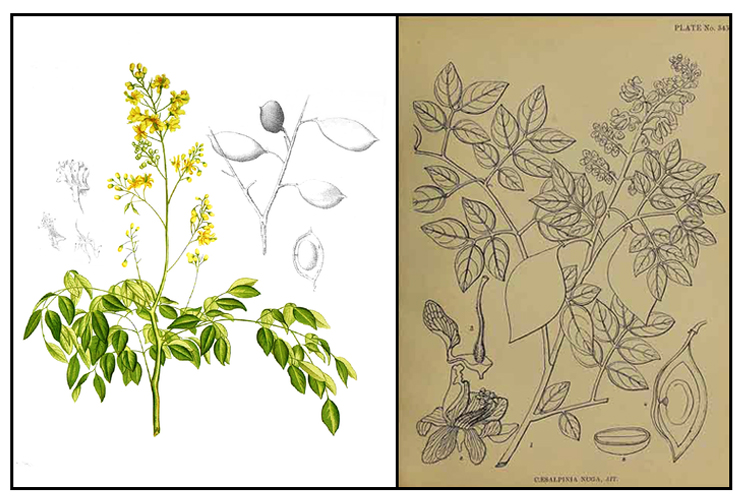
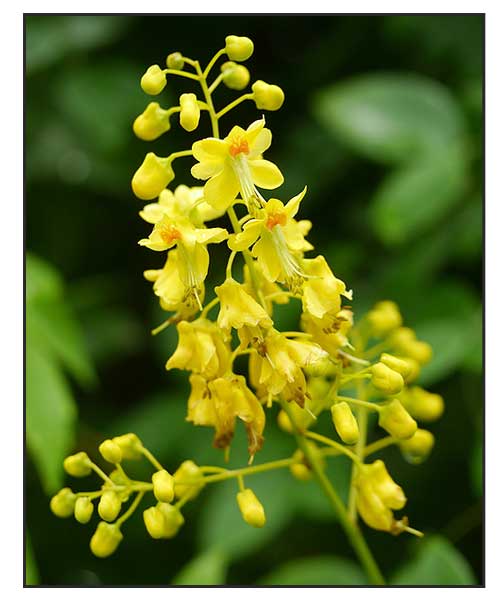
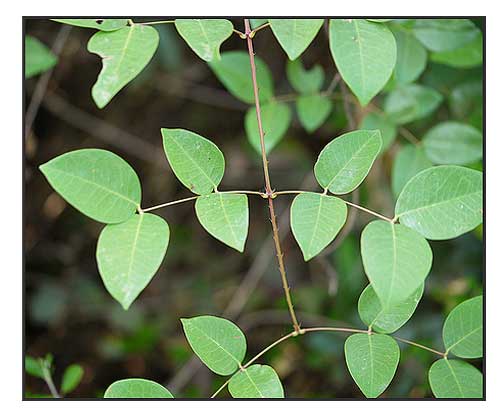
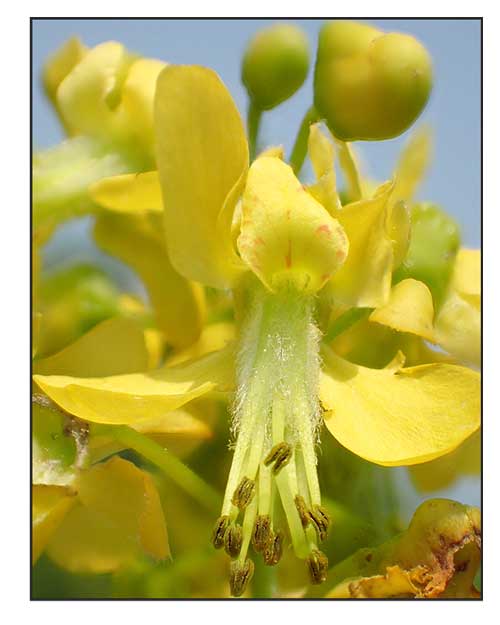
• Bakaig is a smooth, climbing shrub reaching a length of 10 meters or more. Branches are armed with short, stout, hard, hooked prickles. Leaves are bipinnate, 20 to 30 centimeters long, and the rachis armed with recurved spines beneath. Pinnae are 6 to 8, and rather distant. Leaflets are 4 to 6 on each pinna, leathery, shining, ovate to elliptic-ovate, 2 to 5 centimeters long, and pointed at the tip. Flowers are yellow, borne in terminal and ample panicles, and about 1 centimeter in diameter. Pod is 4 to 5 centimeters long, 2.5 to 3 centimeters wide, beaked, hard, and indehiscent, and contains a single seed.
• A liana up to 15 m long, branchlets variably armed. Leaves paripinnate, rachis 10-30 cm long, with 2-4 (-5) pairs of pinnae, pinna 2.5-8 (-12) cm long, stipules triangular, minute, caducous, leaflets opposite,
1-3 (-5) pairs per pinna, base acute, margin curved, apex acute to obtuse. Panicle axillary or terminal, 20-40 cm long. Flowers bisexual, sepals 6-8 mm × 2-4 mm, petals 5-10 mm × 4-5 mm, clawed, ovary with 1-2(-3) ovules. Pod stipitate, 4-7 cm × 2.5-3.5 cm, unarmed, 1(-2)-seeded, indehiscent. Seed ovoid, black. (PROSEA)
• Growth form: A climber with a scrambling growth form up to 5 to 20m in height and can scramble over tall trees. Foliage: Spirally arranged, stalked, bipinnate leaves have about 2–4 pairs of primary leaflets (pinnae) that are up to 8 cm long and each has 1–5 pairs of opposite secondary leaflets (pinnules). Its leathery pinnule blades are egg-shaped to lance-shaped, shining green above, and 2–10 by 1–5 cm. There are blackish recurved spines along the leaf parts.Stems: Stems are long and covered with short, sharp and curved spines. The young stems are red and turn green as they mature. Flowers: Flowers are yellow, fragrant, with egg-shaped petals, and 1.2 cm wide, growing on terminal and axillary flowering shoots that are 10–20 cm long. Fruit: Pods are leathery, round, egg-shaped to kidney-shaped, swollen, with a beaked tip, and 3–4 by 2–3 cm. Each fruit contains a single seed that is black, compressed, and 12 by 20 mm. (Flora & Fauna Web)
 Distribution Distribution
- Native to the Philippines.
-
Throughout the Philippines in tidal swamps, in thickets along the seashore, etc.
- Also native to Andaman Is., Assam, Bangladesh, Bismarck Archipelago, Borneo, Cambodia, Caroline Is., China South-Central, China Southeast, Christmas I., East Himalaya, Hainan, India, Japan, Jawa, Laccadive Is., Lesser Sunda Is., Malaya, Maluku, Myanmar, Nansei-shoto, New Caledonia, New Guinea, Nicobar Is., Queensland, Santa Cruz Is., Solomon Is., South China Sea, Sri Lanka, Sulawesi, Sumatera, Taiwan, Thailand, Tonga, Vanuatu, Vietnam, West Himalaya. ( 18)
- In coastal areas from India and Sri Lanka, eastward to the Ryukyu Islands, throughout South-East Asia to Queensland and New Caledonia. In Malesia it is not found in East Sumatra and East Borneo. (35)
 Constituents Constituents
- Study of stems and roots of C. crista yielded nine new cassane-type diterpenes, taepeenin A-I, and two new norcassane-type diterpenes, nortaepeenin A-B, along with three known diterpenes, vinhaticoic acid, methyl vinhaticfoate and taepeenin A. (5)
- Leaf extracts yielded phenolic acids viz., gallic, protocatechuic, gentisic, chlorogenic, caffeic, p-coumaric and ferulic acids. (see study below)
(7)
- Ethanolic seed extract yielded flavonoids, alkaloids, tannins, triterpenoids, coumarin glycosides, and proteins.
(12)
- Seed kernel extracts yielded five new cassane-type diterpenes, caesalpinins MA-ME (1-5), and three new norcassane-type diterpenes, norcaesalpinins MA-MC (6-8), together with 12 known cassane type diterpenes: 14(17)-dehydrocaesalmin F, caesaldekarin e, caesalmin B, caesalmin C, caesalmin E, 2-acetoxy-3-deacetoxycaesaldekarin e, 2-acetoxycaesaldekarin e, caesalpinin C, 7-acetoxybonducellpin C, caesalpinin E, norcaesalpinin B, and 6-acetoxy-3-deacetoxycaesaldekarin e. (15)
- A methanolic extract yielded two novel compounds, 2-hydroxytrideca-3,6-dienyl-pentanoate and octacosa-12,15-diene along with known compounds 3-O-methylellagic acid 3′O-α-rhamnopyranoside, β-sitosterol and sucrose. (see study below) (22)
Properties
- Roots considered diuretic, tonic, anticalculous.
- Seeds considered antiperiodic, tonic, febrifuge, antidiarrheal.
- Seeds considered uterine stimulants and ovulation inducers and improved menstrual cycle irregularities.
- Bark considered antiperiodic, rubefacient.
- Studies have suggested anthelmintic, anti-amyloidgenic, antiviral, antibacterial, hepatoprotective, analgesic, anti-inflammatory, nootropic, anticancer, antidiabetic, anti-fasciolic, diuretic, anticoagulant, oxidative stress-protective, antiplatelet, anti-PCOS properties.
Parts used
Seeds, leaves, fruit.
 Uses Uses
Folkloric
- In the Philippines, decoction from crushed seeds used as emetic and for dysentery.
-
In India, roots employed as diuretic and used for cases with stone or gravel in the bladder.
- Root juice used orally and externally as application for ophthalmia.
- Externally and internally the juice of the stem used for eye diseases. Roasted fruit also used for the same purpose.
- Finely powdered leaves used as uterine tonic for women immediately after delivery.
- In Ayurveda used for gynecologic diseases, piles, ulcers, worms and deranged kapha. Balances all the tridoshas: vata, pitta and kapha doshas. (26)
- In India, oil from the seed used to soften the skin and remove pimples. Bark used for toothaches. Used for colic, convulsions, malaria, tuberculosis, leprosy and palsy. Also used as uterine stimulant and for cleansing the uterus. (9)
- In Papua New Guinea, fruits used externally for treatment of rashes. In Indonesia, roots used for treatment of kidney stones. (35)
- Bonducin, a bitter extract from seed cotyledons, commonly known as "poor man's quinine" is used for treatment of malaria. (36)
Others
- Ritual / Decorative: In India, seeds used as jewelry, necklaces, prayer beads, good luck charms and worry stones. (24)
- Cosmetics: Fat constituent of seeds used in preparation of skin softeners. (36)
Studies
• Anthelmintic: Study evaluated the anthelmintic activity of Chenopodium
album (L.) and Caesalpinia crista (L.) against trichostrongylid nematodes
of sheep: Study showed both C. crista and C. ablum possess
anthelmintic activity in vitro and in vivo, supporting its traditional use in Pakistan. (2) Study of leaves showed anthelmintic activity in naturally infested goats with strongyles. C. crista also showed activity against Ascaridia galli in vitro. Study also reviewed the anthelmintic efficacy of C. crista seeds in various models of experimentally induced helminthiasis. (24)
• Anti-Amyloidogenic / Alzheimer's Disease: Abeta (amyloid beta) is a major etiological factor in Alzheimer's disease. Study showed C. crista aqueous extract could inhibit the Abeta(42) aggregation from monomers and oligomers and able to disintegrate the preformed fibrils. (3)
• Nootropic / Memory Enhancer / Seeds: Study evaluated the potential of dried seed kernels of C. crista extract as a learning and memory enhancer. Results suggest CC can be beneficial in improving cognition in disorders like dementia and other neurodegenerative disorders. (4)
• Antioxidant / Leaves: A 70% methanol extract of C. crista leaves showed antioxidant and ROS scavenging, attributed to phenolic and flavonoid compounds. (6)
• Antioxidant / Anti-Inflammatory / Leaves: Study evaluated the antioxidant and anti-inflammatory potential of C. asiatica and C. crista leaf extracts. Both exhibited antioxidant properties and inhibited 5-lipoxygenase (anti-inflammatory) in a dose dependent manner, with C. crista showing better activities than C. asiatica, attributed to the higher gallic acid and ferulic acid content. (7)
• Hepatoprotective / Iron-Overload Liver Toxicity: Study evaluated the ameliorating effect of C. crista extract on iron-overload-induced liver injury in mice. Treatment showed attenuation of percentage increase in liver iron and serum ferritin levels. CCME also showed a dose-dependent inhibition of lipid peroxidation, protein oxidation and liver fibrosis. The hepatoprotective effect against the iron overload was attributed to its potent antioxidant and iron-chelating property. (8)
• Antidiabetic / Seeds: Study evaluated the antidiabetic activity of ethanolic and aqueous seed extracts of Caesalpinia crista in STZ-induced diabetic 2-day old pups model. Results showed antidiabetic effects, with the aqueous extract showing more significant effect than the ethanolic extract. Histopath studies showed regeneration of ß-cells of the pancreas. (10)
• Anticancer / Root Bark: Study evaluated the possible anticancer activity of an alcoholic root bark of Caesalpinia crista against Ehrlich Ascites Carcinoma (EAC) Tumor model. Results showed increased survival time and life span, together with significant reduction of solid tumor mass. (11)
• Analgesic / Antioxidant / Anti-Inflammatory / Seeds: Study of an ethanolic seed extract of C. crista showed potent antioxidant activity by DPPH assay, significant anti-inflammatory activity by Carrageenan induced paw edema with diclofenac as standard, and potent analgesic activity by writhing reflexes and tail withdrawal latency in mice. (12)
• Antipyretic / Seeds: Study evaluated the antipyretic activity of ethanolic and aqueous extracts of seeds using Brewer's yeast induced pyrexia in various experimental animal models. Results showed antipyretic action attributed to the inhibition of prostaglandin synthesis. The ethanolic extract showed more significant activity than the aqueous extract. (13)
• Antimicrobial / Seeds: Study showed seed extracts of Caesalpinia crista to have antimicrobial activity against seven of eight selected strains of bacteria and fungi, showing maximum inhibitory effect on P. aeruginosa and F. oxysporum. (14)
• Antimalarial / Antiplasmodial / Seeds: Study evaluated 44 cassane- and norcassane-type diterpenes isolated from C. crista of Mayanmar and Indonesia for antimalarial activity against Plasmodium falciparum clone in vitro. Most of the tested diterpenes displayed antimalarial activity, with norcaesalpinin E showing the most potent activity with an IC50 of 0.090 µM, more potent than the drug chloroquine. (16)
• Seed Oil / Commerce Potential: Study of shade dried oil yielded total 19.66% saturated fatty acids and 80.33% unsaturated fatty acids. Physiochemical analysis revealed a non-drying oil. Results suggest a potential for use in preparation of liquid soap, hair shampoos, and value added products. (17)
• Hepatoprotective Against Iron Load-Induced Toxicity: Study evaluated the ameliorating effect of C. crista extract on iron overload-induced liver injury. Results showed a dose-dependent inhibition of lipid peroxidation, protein oxidation, and liver fibrosis. Study confirmed the hepatoprotective effect likely related to its potent antioxidant and iron-chelating property. (19)
• Antiviral Against Against Poultry Viruses: Various extracts of lathakaranja showed complete inhibition of paramyxovirus while showing highly significant inhibitory activity on orthomyxovirus. Study concludes the medicinal plant C. crista might be useful against economically important viral pathogens of poultry birds. (20)
• Anthelmintic / Seeds: Study evaluated crude seed extracts of Caesalpinia crista for anthelmintic activity against Pheretima posthuma and Ascardia galli. Results showed all extracts significantly demonstrated paralysis and death of worms at higher concentration 15% w/v compared to standard drug piperazine citrate. (21)
• Antibacterial / Seeds: A methanolic extract yielded two novel compounds, 2-hydroxytrideca-3,6-dienyl-pentanoate and octacosa-12,15-diene along with known compounds. The isolated compounds, extract and fractions showed significant in vitro antibacterial activity against S. aureus and MRSA. (see constituents above) (22)
• Toxicity Studies / Seeds: Study evaluated the acute and sub-acute toxicity of ethanol extract of seeds of Caesalpinia crista in albino mice. On acute toxicity study the limit test dose by OECD guidelines was 2000 mg/kg and for sub-acute toxicity, doses of 200 mg/kg and 400 mg/kg per day for 28 days. No toxic effects and no mortality were recorded for the study. Results showed use of the seed extract is safe. (23)
• Anti-Ulcer / Seeds: Study evaluated the anti-ulcer activity of various extracts of Caesalpinia crista seeds on pylorus ligation and indomethacin-induced gastric lesions in albino rats.
Results showed decrease in ulcer score and ulcer index. The ethanol extract showed maximum effect at 200 mg/kbw. (25)
• Hepatoprotective / Paracetamol Induced Toxicity: Study investigated the hepatoprotective activity of C. crista ethanol extract of leaves against paracetamol induced hepatotoxicity in rats. Results showed significant reduction of elevated serum marker enzymes, bilirubin and triglycerides at 200 mg/kbw and 400 mg/kbw extract doses. (27)
• Cytotoxicity / Bark: Study of methanolic extract of barks of Caesalpinia crista for cytotoxic activity by Brine Shrimp Lethality Bioassay showed significant cytotoxic activity with LC50 of 9.10 µg/ml. Chloramphenicol was used as reference with LC50 of 10µg/ml. (28)
• Inhibition of Cholinesterase and ß-Amyloid Aggregation / Potential for Alzheimer's Disease: Study evaluated leaves extract fractions for cholinergic and anti-amyloidogenic activities for treatment of Alzheimer's disease. A methanol extract showed antioxidant property and inhibition of cholinergic enzymes acetylcholinesterase and butyrylcholinesterase. In anti-amyloidogenic evaluation, the CCMeOH showed potential for inhibition of oligomers, fibrillation of Aß42 with good defibrillation of amyloid cascading properties. Results suggest a promising option for treatment of Alzheimer's disease. (29)
• Protection against DNA and Membrane Damage / Leaves: Study evaluated C. crista leaves against free radical induced DNA and erythrocyte damage using H2O2 as oxidative agent. Leaf ethyl acetate (EA) extract yielded a total polyphenol content of 94.5 ± 3.8 mg/g GAE, while a methanol extract yielded 52.7 ± 2.8 mg/g GAE and a water extract yielded 31.84 ± 1.8 mg/g GAE. Total flavonoid content was highest in the EA extract at 60.46 ± 2.3 mg/g QE. Among the extracts, EA and ME showed better protection against RBC hemolysis and DNA damage. Results suggest C. crista contains biomolecules and can inhibit oxidative stress. (30)
• Antiplasmodial / Acute Toxicity Study / Seeds: Study evaluated the antiplasmodial activity of C. crista seed extracts against rodent malarial infections in chloroquine sensitive Plasmodium falcifarum strain. Results showed significant (p<0.05) and dose-dependent decrease in parasitaemia in varying doses of 50-200 mg/kg p.o. in both suppressive and curative tests. The alcoholic extract showed no toxicity in Wistar rats. Oral LD50 was greater than 5000 mg/kg. (31)
• Anticoagulant / Antiplatelet / Seeds: Study evaluated the anticoagulant, antiplatelet, and clot lysis efficiency of C. crista seed aqueous extract. The extract showed strong anticoagulant effect as evidenced by enhanced clotting time. The extract also exhibited strong antiplatelet activity by inhibition of both ADP and epinephrine agonists induced platelet function. The extract exhibited no damaging effects on blood vessels, edema, and RBC lysis potency. (32)
• Anti-Fasciolic Efficacy in Infected Buffaloes / Seeds: Study evaluated the efficacy of C. crista seeds and Saussurea lappa roots to treat buffaloes naturally infected with fasciolosis, with efficacy compared with triclabendazole. The two plants were found significantly effective (p<0.05) and safe to use against fasciolosis. Effficacy for triclabendazole was 100% after the first dose while the two herbal treatments required a second dose of 150 mg/kbw. The antifasciolic effects may be due to the presence of metabolites like alkaloids, tannins, saponins, phenolic compounds, and flavonoids. (33)
• α-Caesalpin / Antidiabetic / In Silico Docking Analysis / Seed: Study evaluated the bioactivity of α-caesalpin compound from C. crista for antidiabetic-based on reverse docking studies.. Results showed α-caesalpin has greater potential as antidiabetic based on its binding affinity and intermolecular interactions. AMES test showed the α-caesalpin is not a potential mutagens and not carcinogenic. Drug-likeness prediction showed α-caesalpin fulfills the requirements with 0.55 bioavailability score. (34)
metabolites like alkaloids, tannins, saponins, phenolic compounds, and flavonoids. (33)
• Diuretic Potential / Seed: Study evaluated the diuretic activity of seed extract of C. crista using various diuretic models in albino rats. Seed extracts doses of 100, 200, and 400 mg/kg were used, with hydro-chlorothiazide (HCTZ) as control. Results showed increase in urine volume, enhanced excretion of sodium, potassium and chloride ions in urine. Serum concentration of creatinine, urea, glucose, and albumin were increased to control. (37)
• Eco-friendly Corrosion Inhibitor / Aluminium / Seed: Study evaluated the inhibitory impact of C. crista seed extract (CCE) on corrosion of aluminium alloy at temperatures varying between 303 and 333K, employing PDP, EIS, and weight loss methodologies. Results showed the CCWE extract effectively safeguards Al against corrosion, with efficacy increasing with higher concentrations. At 2.o g/L, 84.9% inhibition was achieved at 303K. The inhibitory action was a cathodic-type behavior across all concentrations and temperatures, aligning well with Langmuir isotherm. (38)
• Red Blood Cell Protection from Sodium Nitrite- Induced Oxidative Stress / Antiplatelet Activity / Seed Coat:The MECCC (methanol extract of C. crista coat( possesses protective effect against NaNO2 induced oxidative stress and inhibits platelet aggregation, suggesting nontoxic properties. Study evaluated the RBC-protective activity of MECCC using various assays. MECCC reduced the level of lipid peroxidation and protein carboxylation in RBC caused by NaNO2 in a dose-dependent manner. MECCC normalized levels of superoxide dismutase (SOD) and catalase (CAT) in oxidative stress-induced RBC in a dose-dependent manner. MECCC also exhibited mild antiplatelet activity by inhibiting both ADP and epinephrine agonists that induce platelet aggregation. (39)
• Anti-Inflammatory / Analgesic / Seed Coat Extract: Study evaluated C. crista seed coat extract for anti-inflammatory and analgesic activity using Carrageenan-indcued paw edema, Egg albumin-induced paw edema, Eddy's hot plate test, and Tail immersion method. Results showed decreased induced inflammation, increase pain threshold and reduction of pain factor inducing analgesia. Results suggest analgesic and anti-inflammatory activity. (40)
• Effect on Letrozole-Induced-Polycystic Ovarian Syndrome (PCOS) / Seeds: PCOS is the most common endocrine disorder in women of reproductive age, affecting reproductive, endocrine, and metabolic functions. Study was designed to validate Ayurveda claims regarding efficacy of C. crista on treatment of PCOS, and evaluated the effects of C. crista on reproductive abnormalities, reproductive hormones, and glycemic changes in letrozole-induced model of PCOS in rats. Treatment with C. crista at high dose of 500 mg/kg significantly improved reproductive abnormalities (ovulation and menstrual irregularities) and histopathological changes associated with PCOS, and also restored elevated reproductive hormone levels (testosterone, FSH, and LH) and normalized LH/FSH ratio, which is deranged in PCOS. (41)
Availability
Wild-crafted. |